

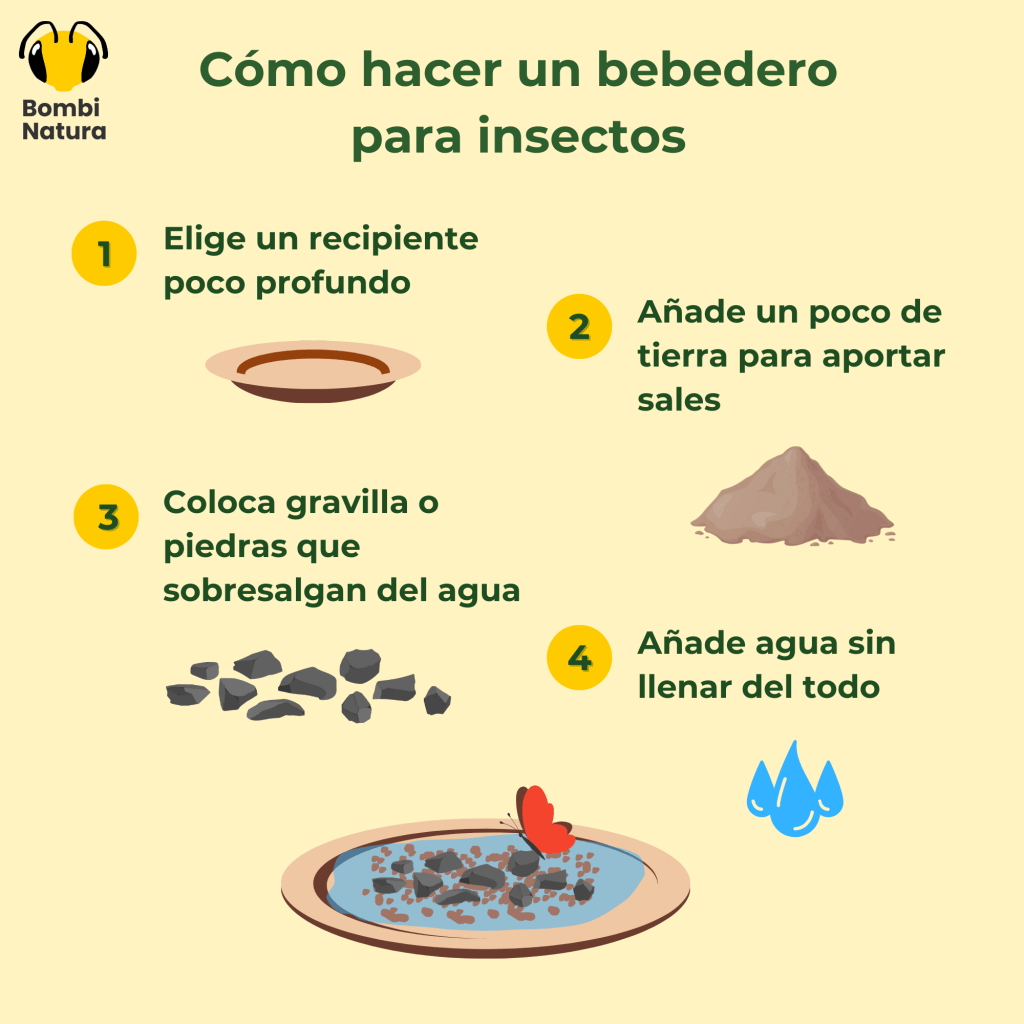
With temperatures reaching over 40°C and little rain in many regions, it's essential to provide water sources for animals that need them. Although creating a pond for aquatic insects can be a complex project in some homes, providing a small drinker for insects is within everyone's reach.
You may have heard of bird baths in the summer. Well, while many insects get the water they need from their food, there are also many that can benefit from an accessible water source. Like all living creatures, insects need water to carry out their metabolic functions. But in addition, water is also useful to them for other functions that we will tell you about below:
Refrigeration
When temperatures get too high in the nests, worker honeybees and social wasps collect water and take it to the nest. There, they spread it over the small gaps around the edges of capped cells containing brood. Honeybees also distribute water around the edges of open cells. As this water evaporates, it cools the nest, helping to maintain a suitable temperature.
Nutrient and mineral salt intake
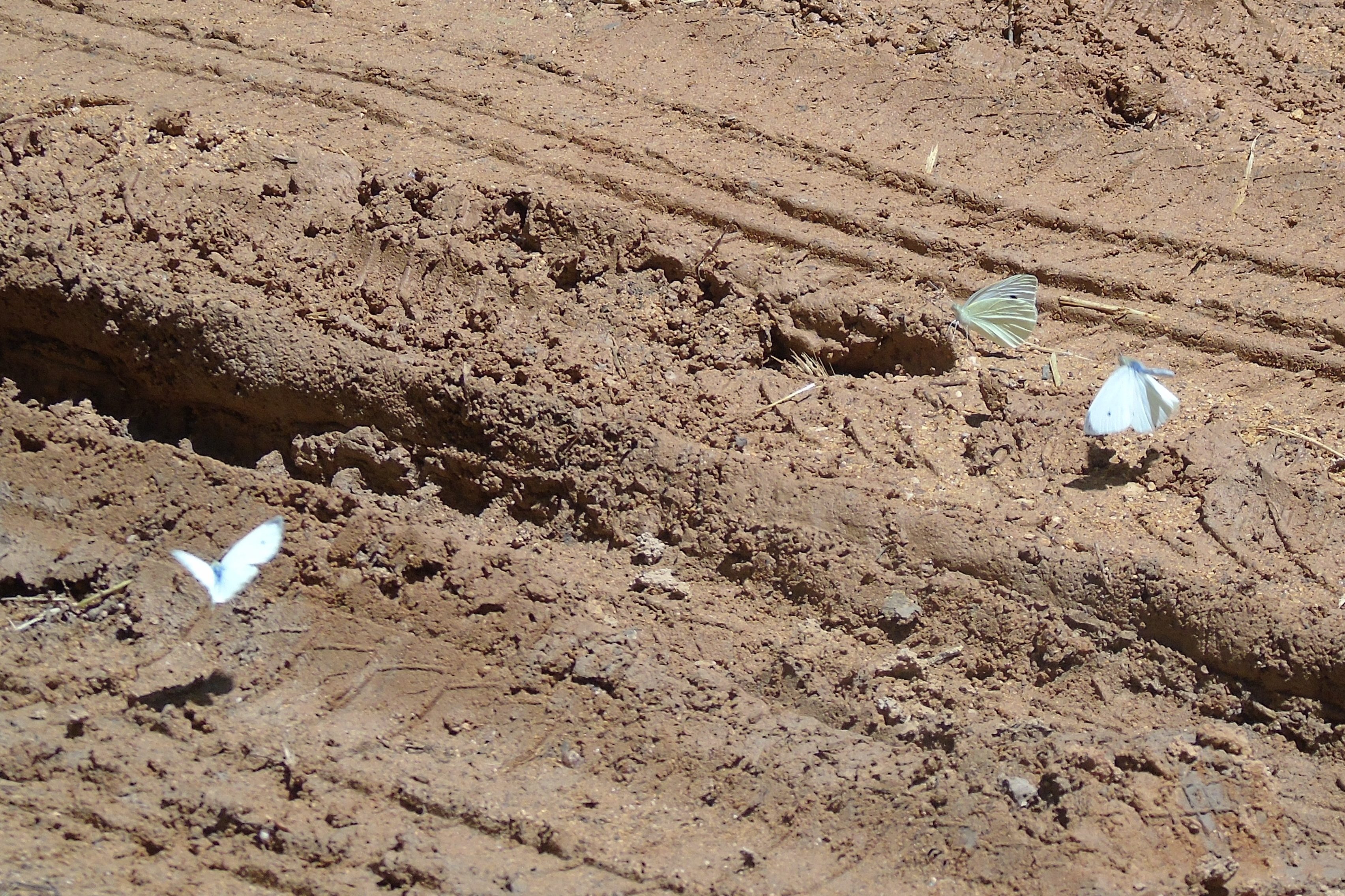
Honeybees also use water to dilute honey before consuming it and to produce the royal jelly with which they feed the larvae. Furthermore, several bee species have been observed drinking “dirty water” from puddles and soil, likely to obtain mineral salts that they cannot acquire from their food. This behaviour is also seen in butterflies, which often gather on damp soil, and even drink from sweat, urine, and excrement to obtain minerals, amino acids, and proteins that supplement their diet.
Nest building
Social wasps need water to build their paper nests. The worker wasps responsible for collecting water drink it and store it in their stomachs to transport it to the nest. Once there, they regurgitate it to their companions responsible for producing the vegetable pulp. These latter wasps find plant fibres, which they collect and chew, mixing them with the water to produce the pulp with which they will build their nests. Water can be a limiting resource for them, which is why it is very common to see them near water taps.
Furthermore, water is also vital for bees and wasps that build their nests using mud. Some species collect water to moisten the soil and produce the mud themselves.
Building an insect drinking station
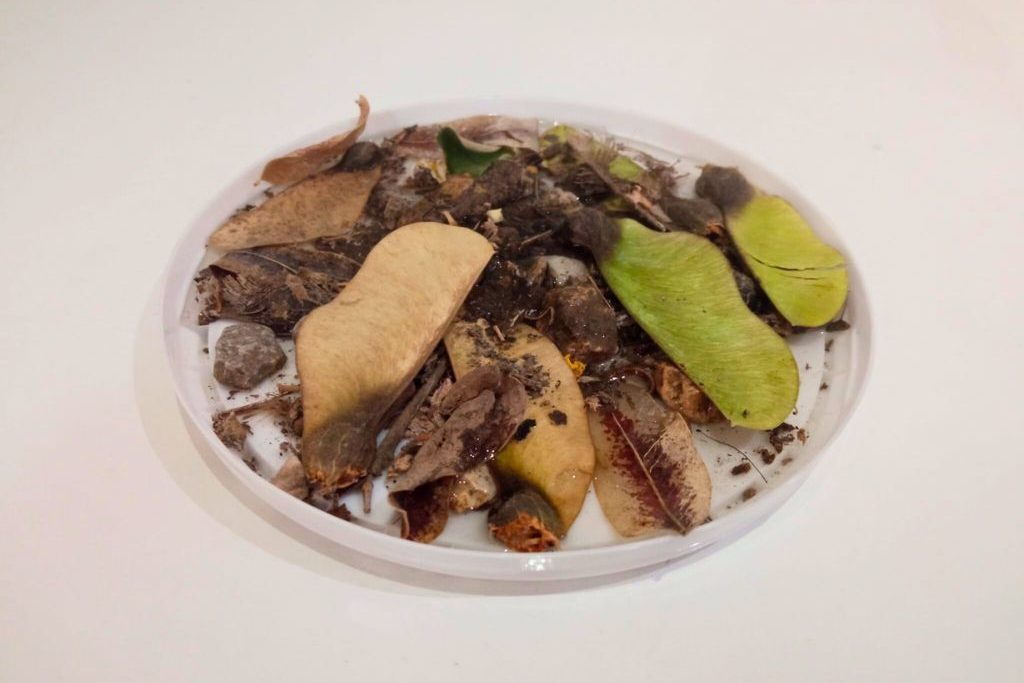
Knowing the importance of water sources for insects, now is the time to create a drinking fountain for them. It's very easy and you can do it by recycling materials you have at hand. You will need the following:
- A shallow container such as a plate or a large yoghurt lid, to prevent insects from drowning.
- Elements of support such as stones, gravel or vegetation debris, on which they can perch safely.
- Clean water, with the option to add a little soil to release the mineral salts that some species require.
If you live in the city centre and have a balcony, you can place it there. Although the diversity of species in an urban environment is lower, it will surely benefit more than one insect.
References
Bodri, M. S. (2018). Puddling behaviour of temperate butterflies: preference for urine of specific mammals?. The Journal of the Lepidopterists’ Society, 72(2), 116-120.
Cairns, S. M. et al. (2021). Ratios rather than concentrations of nutritionally important elements may shape honey bee preferences for ‘dirty water’. Ecological Entomology, 46(5), 1236-1240.
Deborah Seiler (25 June 2025). If You’re Thirsty, They’re Thirsty: Make a Simple Water Source to Support Pollinators. The Xerces Society. https://www.xerces.org/blog/if-youre-thirsty-theyre-thirsty-make-simple-water-source-to-support-pollinators
Genise, J. F. (2016). Basic architecture of soil nesting wasps and bees. In Ichnoentomology: Insect Traces in Soils and Paleosols (pp. 193-217). Cham: Springer International Publishing.
Jones, J. C., & Oldroyd, B. P. (2006). Nest thermoregulation in social insects. Advances in insect physiology, 33, 153-191.
Le Bivic, P. et al. (2025). Effects of weather and colony size on water collection in honey bee, Apis mellifera, colonies. Animal Behaviour, 227, 123271.
Nicolson, S. W. (2009). Water homeostasis in bees, with the emphasis on sociality. Journal of Experimental Biology, 212(3), 429-434.
Richter, M. R. (2000). Social wasp (Hymenoptera: Vespidae) foraging behaviour. Annual review of entomology, 45(1), 121-150.

 English
  Spanish