

Insects cannot regulate their body temperature like mammals. So how do they survive the often extreme temperatures of winter? Like all other animals, they have developed three main strategies that they can combine to survive the winter: the migration, hibernation and the resistance to cold.

Migration
During migrations, insects move in a targeted and persistent manner in search of a new habitat that provides favourable conditions, in this case warmer conditions. Migrations are usually induced by changes in the photoperiod, i.e. the length of the day, which is usually linked to climatic changes.
2. Hibernation
During hibernation, the insects enter into a state of inactivity, slowing or stopping their development until conditions become suitable again or they perceive certain stimuli. This period of dormancy can last from a few days to years in some cases, and can be induced by changes in photoperiod, temperature, food availability, humidity, or certain chemicals.
3. Cold resistance
Low temperatures have several harmful effects on insects: crystallisation of cell membranes, deformation of proteins, deterioration of their metabolism and the formation of ice crystals that can destroy their cells and tissues. To counteract these, insects have developed the following mechanisms:
- Anti-freeze and stress response proteins: They produce antifreeze proteins that bind to ice crystals in formation to prevent their growth, and stress response proteins, which stabilise other proteins, preventing their deformation at low temperatures.

- Removal of solid particles: Water remains liquid down to -42°C if there is no solid particle to promote crystallisation. When winter arrives, the insects remove these particles from their gut, ceasing to feed, removing certain proteins from their circulatory fluid and cleansing, or even moulting, their gut.
- Production of cryoprotectants: Insects produce substances such as sugars and glycerol which, by increasing the amount of solutes, help to keep their body fluids liquid at low temperatures and retain body water.
- Modification of cell membranes: They alter the chemical composition of their cell membranes to maintain their flexibility and adjust their permeability at low temperatures.
- Adaptation to dehydration: Ice crystals serve as a "foothold" for liquid water to organise and form more ice. When insects come into contact with ice crystals, they lose water and become dehydrated. To cope with this, some species accumulate stress response substances and proteins that help them tolerate very high levels of dehydration.
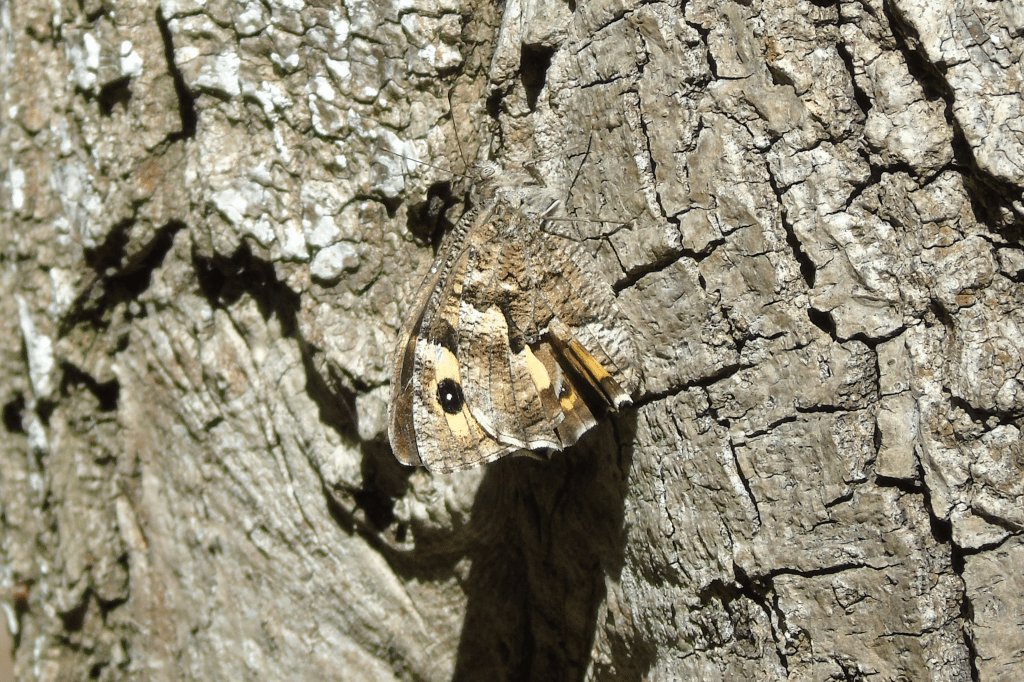
- Control of ice formation: Some of the more cold-resistant insects favour the formation of ice crystals at relatively high temperatures in order to have more control over the process and to adapt gradually. To do this, the insects, or the micro-organisms they possess, produce agents (such as proteins or inorganic crystals) that promote the formation of ice crystals outside cellsfor example, in your intestine or in your circulatory fluid, to prevent tissue damage. Cells dehydrate slowly, but anti-freeze molecules inside them prevent complete dehydration and help to keep them in a liquid state.
Thanks to these mechanisms, it is not surprising that there are terrestrial insects that live in the Arctic or that some aquatic insects may survive in completely frozen water. This is just one example of their amazing adaptability, but there are many more that we will continue to explore.
References
Auteri, G. G. (2022). A conceptual framework to integrate cold-survival strategies: Torpor, resistance and seasonal migration. Biology Letters, 18(5), 20220050.
Buch, J. L., & Ramløv, H. (2017). Detecting seasonal variation of antifreeze protein distribution in Rhagium mordax using immunofluorescence and high resolution microscopy. Cryobiology, 74, 132-140.
Danks, H. V. (2007). How aquatic insects live in cold climates. The Canadian Entomologist, 139(4), 443-471.
Gullan, P. J., & Cranston, P. S. (2014). The insects: an outline of entomology. John Wiley & Sons.
Holmstrup, M. (2014). The ins and outs of water dynamics in cold tolerant soil invertebrates. Journal of thermal biology, 45, 117-123.
Perfeldt, C. M., Chua, P. C., et al. (2014). Inhibition of gas hydrate nucleation and growth: efficacy of an antifreeze protein from the longhorn beetle Rhagium mordax. Energy & fuels, 28(6), 3666-3672.
Teets, N. M., & Denlinger, D. L. (2013). Physiological mechanisms of seasonal and rapid cold-hardening in insects. Physiological Entomology, 38(2), 105-116.
Toxopeus, J., & Sinclair, B. J. (2018). Mechanisms underlying insect freeze tolerance. Biological Reviews, 93(4), 1891-1914.
Vrba, P., Sucháčková Bartoňová, A., et al. (2022). Exploring cold hardiness within a butterfly clade: Supercooling ability and polyol profiles in European Satyrinae. Insects, 13(4), 369.

 English
  Spanish