

Of Nomads and Andrenas

The first image that comes to mind when we think of bees is that of a flowery, springtime field. And we would not be wrong with that scenario. But where do you spend most of your time - at home or in the supermarket? Just like us, bees also need a shelter in which to rest and, above all, in which to place their young and offer them care and protection. Y each type of bee approaches the location, design and construction of its nest in a particular way. Here you can see a sandy embankment in the middle of the forest, a place that countless bees would call home.
Zooming in a bit, in this same place we have a female of Andrena vaga approaching their nest:
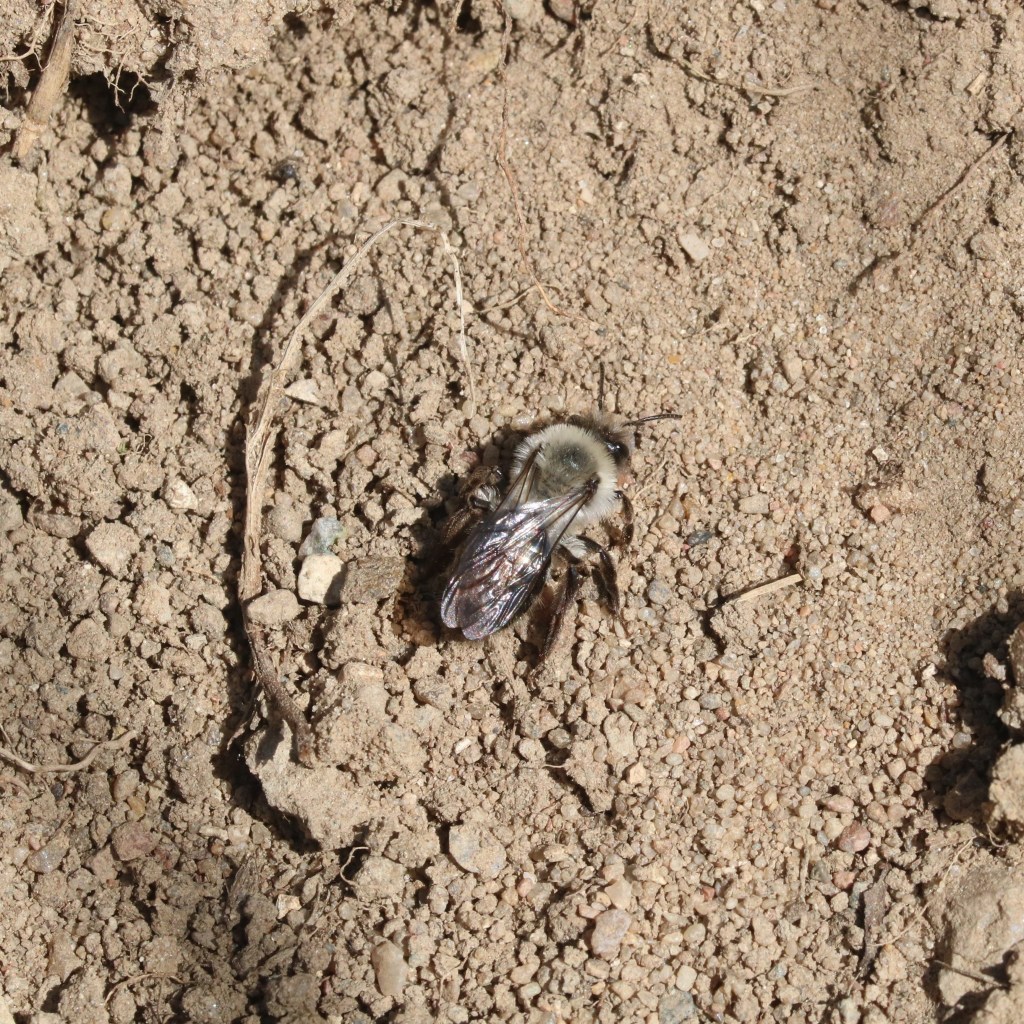
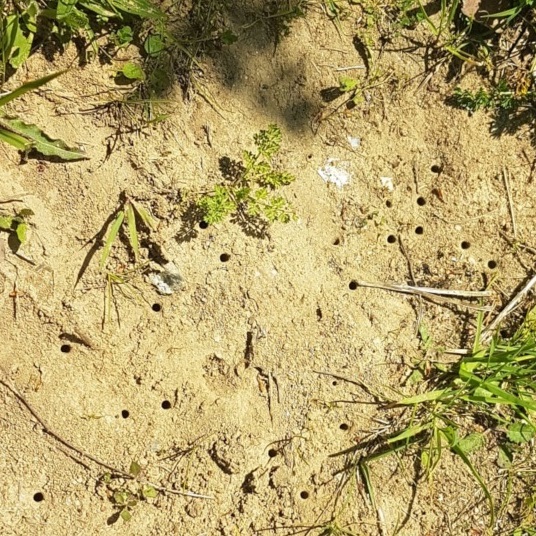
The Andrena, are known as "mining bees in English and as "sand bees in German, and it's not hard to see why. Our friend in the picture is far from alone. Each of those little holes is the entrance to a particular nest, dug by a female Andrena,. Although they are so close together, they are still solitary" beesThey do not really collaborate in any way, and each nest is completely independent of the others. Only a few bees, such as honey bees, bumble bees and some of the "solitary" bees of genera like Colletes or Lasioglossum They form real societies, but in reality this way of life is the exception rather than the rule.
As in human crowds, large congregations soon attract thieves and thugs. In contrast to the hairy Andrena,bees of the genus Nomadaas this Goodenian nomadThey do not need scopa, corbiculae or any body hair to transport pollen. Thus, it is not surprising that the Nomada more like a wasp than a bee. This female Goodenian nomadwas flying over a leaf in search of nesting birds. Andrena, to parasitise, including those of Andrena vaga. When the mining bee moves away from the nest in search of pollen and nectar, parasiteswhich often lurk in the background, seeking to enter someone else's nest to lay their eggs and thus reap the food benefits of pollen and nectar without having to go to the trouble of fetching them.

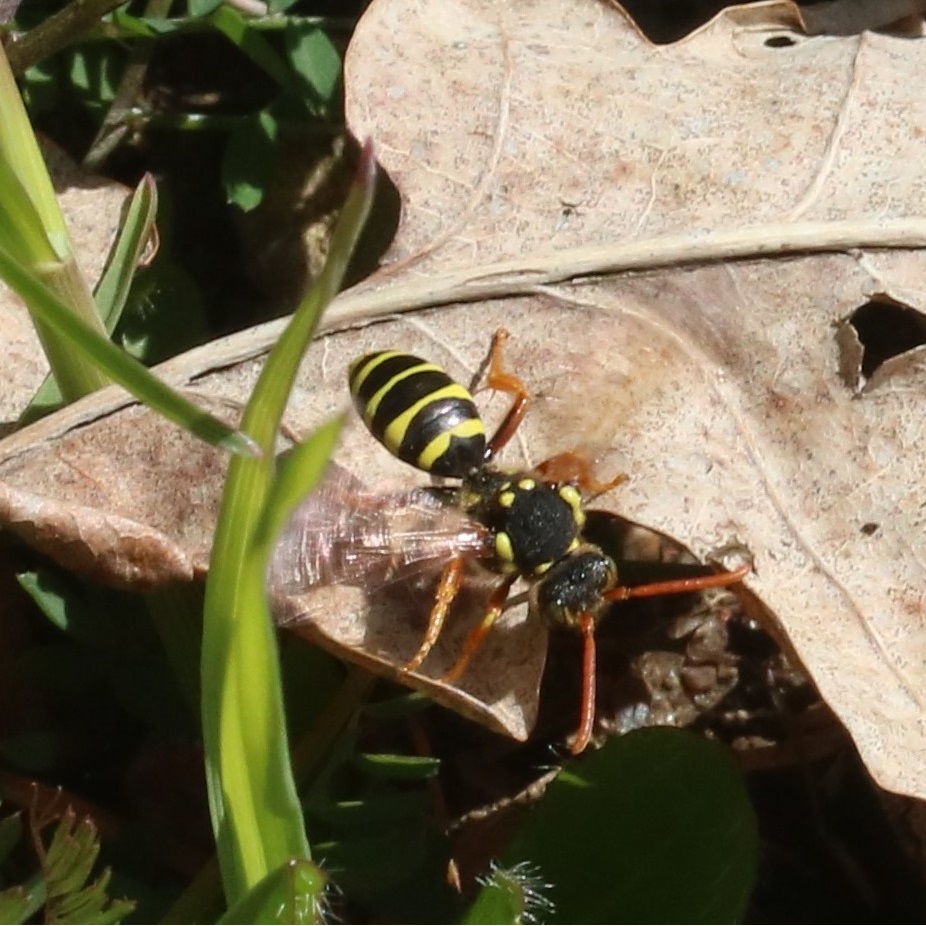
We also found another female of Nomadain this case, Nomada fucataThe mining company's nests, in this case those of the mining company, have been found in the sand, exploring the spaces and nooks and crannies of the sand in search of nests to parasitise. Andrena flavipes. As you can see, each species parasite is usually adapted to specific hosts, so that the presence of one type of bee or another can lead us to suspect the presence of other species with which there are such interactions.
Here you have Andrena flavipesneighbour of Andrena vaga and likely victim of the Nomada fucata who were hanging around in the vicinity.

You can see that even a few square metres of loose sand provide for a lot of species and overlapping relationships. Today we have focused on sand bees and a couple of cuckoo bees, but in the future we can talk about carpenter bees, leaf cutters, wool carders, gill dwellers and so on and so forth. The adventure is just beginning.

 English
  Spanish