

Pesticides are substances of chemical or biological origin that are released into the environment to prevent, control and reduce populations of organisms that harm food, human health and comfort, and generate negative economic impacts.
The use of pesticides has led to an increase in agricultural productivity. However, intensive application of synthetic pesticideswhich we will refer to throughout this text, has generated serious problems for both human health and the environment. In the case of insects, the growing knowledge about their effects, their persistence in soil and water, and their dispersal to natural areas, has led to the identification of these products as one of the main causes of the decline of their stocks.
Pesticides come into contact with non-pest insects. They can be found in all plant organs, either by direct application or because the plant has absorbed and transported them into its tissues. This affects the pollinators,which feed on contaminated pollen or nectar. In addition, in the case of social species such as honey bees, workers bring the collected food back to the hive, exposing more individuals.
Insects predators and parasitoids of pest organisms are also not exempt from exposure to pesticides by consuming contaminated prey or coming into contact with treated plants. Diptera and beetles coprophages are exposed to pesticides by feeding on the excrement of farm animals treated with pesticides. Even the aquatic insects and terrestrial insects in nature reserves may be exposed due to the dispersal of both pesticides and the insects themselves.

In many cases, insects are exposed to not one but a combination of pesticides. An analysis of neonicotinoid insecticides in honey samples from around the world found that 45% of the samples contained two or more insecticides. In Missouri, wild bees and lepidopterans were sampled in protected areas near crop fields, and 16% of the bees were found to have two or more pesticides, and 4% of the lepidopterans were found to have a combination of five.
In addition, another study using data from northern Europe and the United States indicated that between 2 and 5 pesticides were commonly detected in streams, with a predominance of herbicides. The effect of these mixtures on insects is unpredictable, as pesticides often exhibit synergies. For example, some fungicides can slow down the detoxification of insecticides by insects, enhancing their effects.
Among all types of pesticides, herbicides, insecticides and fungicides are the most commonly used. Most insecticides are neurotoxic and kill the target insect rapidly, although they also affect other insect systems collaterally. Fungicides and herbicides are designed to attack fungi and plants, respectively. However, both cause sub-lethal effects in insects, including alterations in their behaviour, development, microbiota and reproduction.
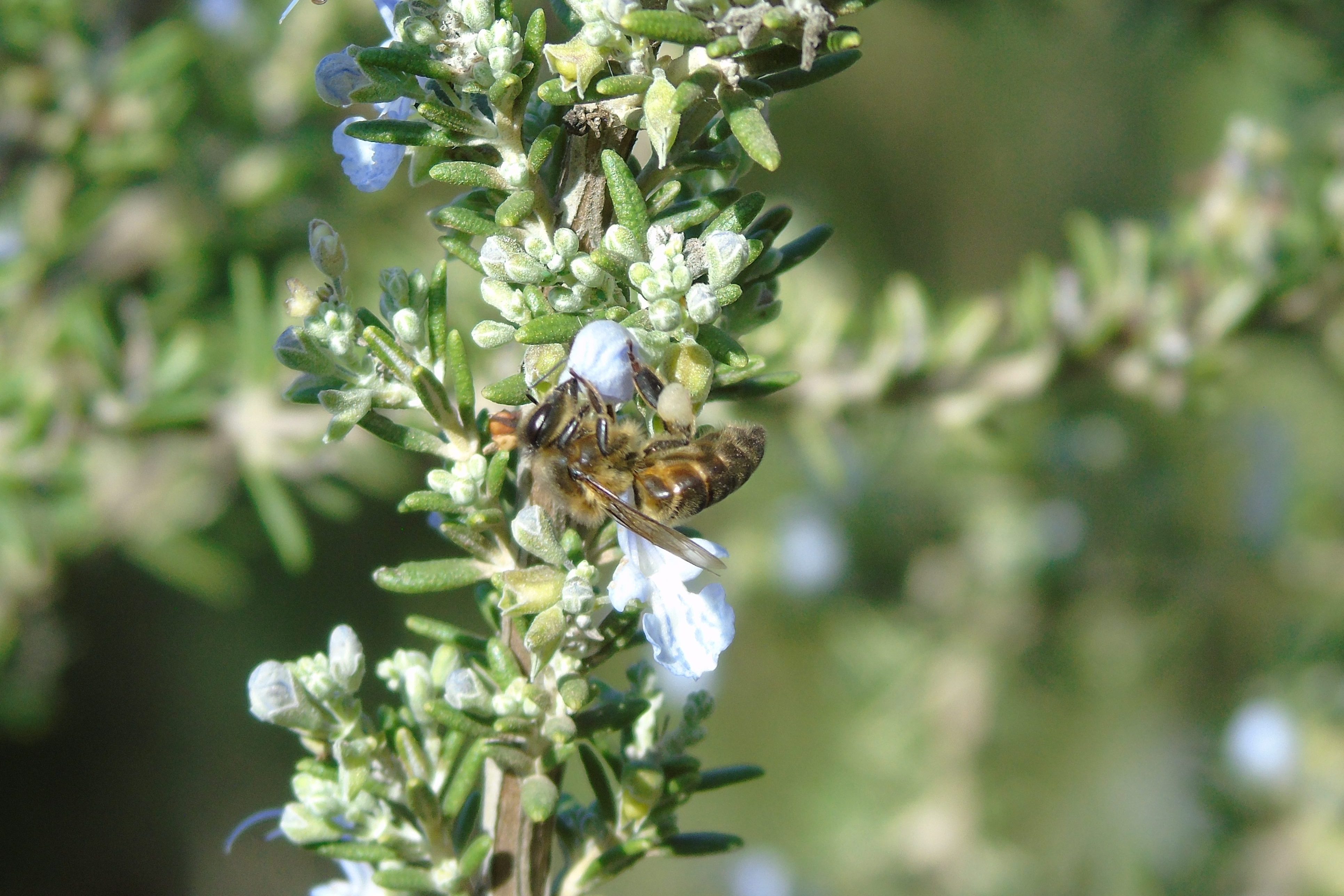
In addition, pesticides indirectly affect insects that do not come into direct contact with each other with them. Insecticides can reduce the availability of food for the natural enemies of pest insects, and herbicides, by reducing "weeds", cause the loss of host plants, pollen, nectar, shelter, nesting and overwintering areas for pollinating insects and predators.
More than two million tonnes of pesticides are applied annually. globally. They can migrate long distances, volatilised in the air or leached from the soil into water bodies, and remain in nature for days or even years, depending on both the active compound (the main pesticide action) and the other ingredients added in the formulation.
Many of the pesticides commonly used in the 1950s have already been banned in most countries because of their accumulation in the environment and their danger to both humans and ecosystems. Although the new synthetic pesticides attempt to be safer, when their toxicity is studied in depth, they often show an increased toxicity to humans and ecosystems. high persistence on the environment and negative effects on non-target organisms. It is therefore essential to minimising the use of pesticides, not only to protect the health of insects and ecosystems, but also our own.
References
Basu, P., Ngo, H. T., et al. (2024). Pesticide impacts on insect pollinators: Current knowledge and future research challenges. Science of The Total Environment, 954, 176656.
Kalyabina, V. P., Esimbekova, E. N., et al. (2021). Pesticides: formulants, distribution pathways and effects on human health-a review. Toxicology reports, 8, 1179-1192.
Main, A. R., Hladik, M. L., et al. (2020). Beyond neonicotinoids-Wild pollinators are exposed to a range of pesticides while foraging in agroecosystems. Science of the Total Environment, 742, 140436.
Mitchell, E. A., Mulhauser, B., et al. (2017). A worldwide survey of neonicotinoids in honey. Science, 358(6359), 109-111.
Sánchez-Bayo, F. (2021). Indirect effect of pesticides on insects and other arthropods. Toxics, 9(8), 177.
Schreiner, V. C., Szöcs, E., et al. (2016). Pesticide mixtures in streams of several European countries and the USA. Science of the Total Environment, 573, 680-689.
Schuhmann, A., Schmid, A. P., et al. (2022). Interaction of insecticides and fungicides in bees. Frontiers in Insect Science, 1, 808335.
Serrão, J. E., Plata-Rueda, A., et al. (2022). Side-effects of pesticides on non-target insects in agriculture: A mini-review. The Science of Nature, 109(2), 17.
Sharma, A., Kumar, V., et al. (2019). Worldwide pesticide usage and its impacts on ecosystem. SN Applied Sciences, 1, 1-16.
Sponsler, D. B., Grozinger, et al. (2019). Pesticides and pollinators: A socioecological synthesis. Science of the Total Environment, 662, 1012-1027.
Wagner, D. L. (2020). Insect declines in the Anthropocene. Annual review of entomology, 65(1), 457-480.
Wolfram, J., Bub, S., et al. (2023). Pesticide occurrence in protected surface waters in nature conservation areas of Germany. Science of The Total Environment, 858, 160074.

 English
  Spanish