

Nocturnal pollination is a much less well-known phenomenon than diurnal pollination, but of great ecological relevance. Although we tend to associate pollination with daylight, it is estimated that one third of flowering plants benefit from nocturnal pollination. In addition, about 30 % of vertebrates and 60 % of invertebrates are active at night.
Although much information on this subject is still lacking, we tell you what is known about which animals pollinate plants in the dark and how they find them.
Which animals act as nocturnal pollinators?
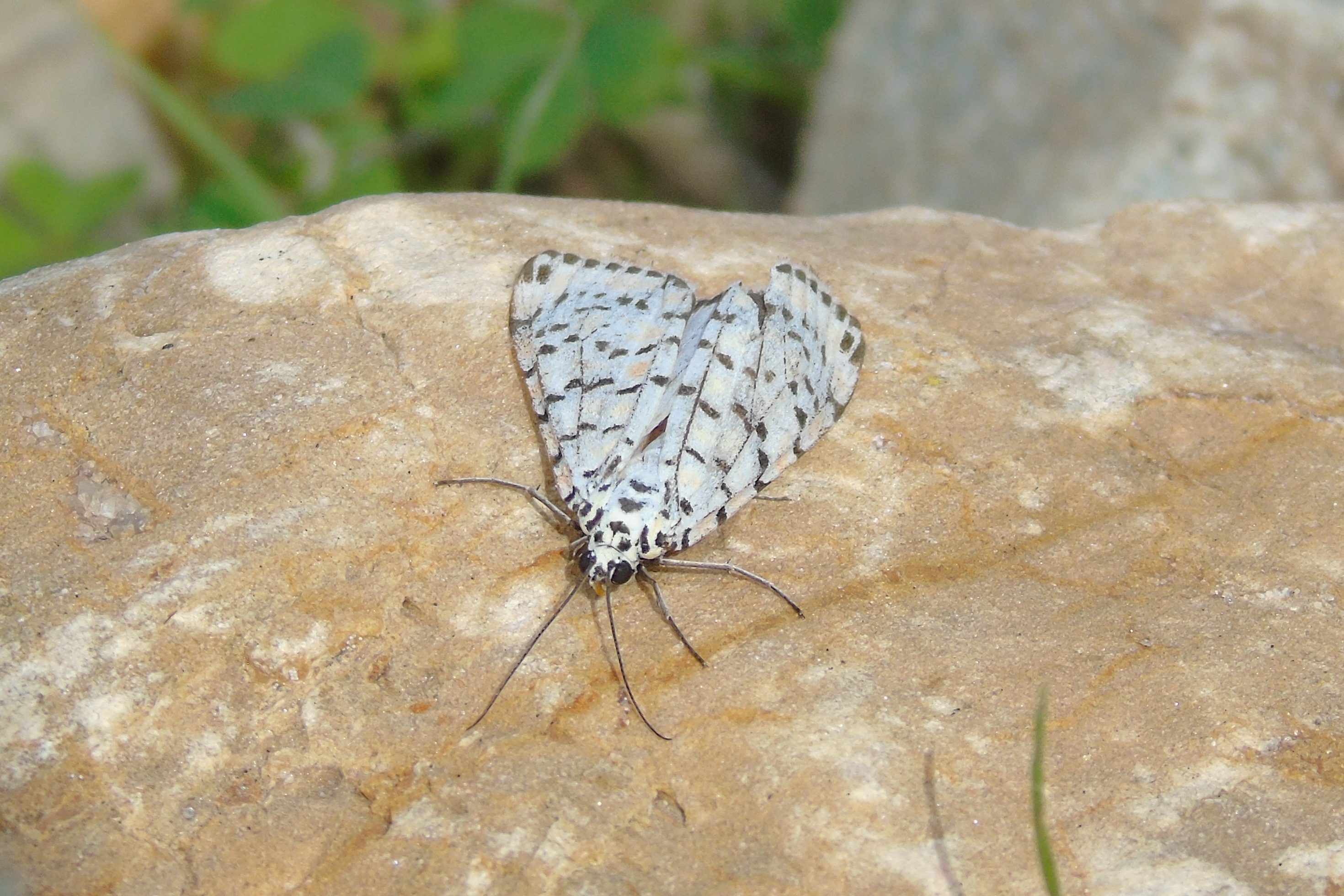
- Moths are the best studied group of nocturnal pollinators. Although some species may specialise in pollinating particular plants, most adult moths consume nectar from a variety of flowers, transporting pollen in the process. The role of moths in pollination is increasingly recognised, even in plants that are also pollinated during the day.
- Beetles, although less studied, may also act as pollinators by visiting flowers, mainly in search of pollen or edible flower parts.
- In the case of bees, they have been recorded in approximately 250 species with crepuscular or nocturnal activity. These species are thought to benefit from reduced competition for nectar and pollen at night, as well as reduced presence of predators.
- Within the flies, gill flies (family Cecidomyiidae) and fungus flies (superfamily Sciaroidea) also play an important role in nocturnal and crepuscular pollination.
- Other insects active at night, such as cockroaches, ants and crickets, may also act as pollinators, but information about them is very limited.
- In tropical and subtropical regions, some nectar-feeding bats play a prominent role as nocturnal pollinators. Many plants have evolved floral characteristics adapted to their visitation.
How do you locate the flowers?
Both nocturnal pollinators and plants have evolved specific strategies for interacting in the dark:
- Night vision: Many nocturnal insects have evolved vision systems that maximise light capture and accumulation in very low light conditions. In addition, colour vision at low light levels has been detected in several species active at night: moths, moths, moths and moth-eaters. Deilephila elpenor, Hyles lineata e Hyles galliiand the carpenter bee Xylocopa tranquebarica. In the absence of studies to confirm this in other species, it is thought that nocturnal colour vision may be more widespread among moths and other pollinating insects active at night.

- Smell and floral aromasEven with visual adaptations, olfaction remains an important sense in locating flowers for nocturnal insects. It has been found that plants adapted to nocturnal pollination tend to emit scents, which they may not release during the day. Furthermore, in comparative studies of related species, nocturnal species have been found to release much stronger scents than diurnal species.
- Floral heat: many flowers retain or generate heat, which helps to volatilise compounds that attract insects and, at the same time, provides a warmer microhabitat during cooler night-time temperatures. Although it is difficult to isolate heat-induced attraction from other factors, it is thought that this stimulus may be important for mosquitoes and other insects that feed on blood and nectar, and are able to detect thermal radiation. Beetles of the family Scarabaeidae have also been found to spend the night inside the floral chambers of heat-generating plants. There they can feed and reproduce with less energy expenditure than outdoors.
- Finally, it has been suggested that floral moisture and the emission of CO₂ may also serve as signals to attract nocturnal pollinators. However, there are not many studies that explore these factors in depth.
A detailed understanding of how plant-pollinator interactions work is fundamental to understanding how human-induced changes may affect them. In particular, it is of concern the effect of light pollutionwhich we have already discussed. In the coming years we will certainly make further progress on this topic and get a more complete picture of nocturnal pollination.
References
Borges, R. M. (2018). Dark matters: Challenges of nocturnal communication between plants and animals in delivery of pollination services. The Yale journal of biology and medicine, 91(1), 33.
Borges, R. M. et al. (2016). Patterns and processes in nocturnal and crepuscular pollination services. The Quarterly review of biology, 91(4), 389-418.
Kelber, A. et al. (2006). Light intensity limits foraging activity in nocturnal and crepuscular bees. Behavioral Ecology, 17(1), 63-72.
Kendall, L., & Nicholson, C. C. (2025). Pollination Across the Diel Cycle: A Global Meta-Analysis. Ecology Letters, 28(1), e70036.
Macgregor, C. J., & Scott-Brown, A. S. (2020). Nocturnal pollination: an overlooked ecosystem service vulnerable to environmental change. Emerging Topics in Life Sciences, 4(1), 19-32.
Waiker, P. et al. (2019). Foraging and homing behavior of honey bees (Apis mellifera) during a total solar eclipse. The Science of Nature, 106, 1-10.
Warrant, E., & Somanathan, H. (2022). Colour vision in nocturnal insects. Philosophical Transactions of the Royal Society B, 377(1862), 20210285.

 English
  Spanish