

During the springs of 2024 and 2025, we visited four gardens in Murcia to assess which plants attracted the most insects. The observations were categorised into five groups: honeybees, wild bees, hoverflies, non-hoverfly flies, and other insects. You can find the full results and detailed methodology at this link.
Here we show you some of the species for which we recorded the highest number of visits. All of them are of Mediterranean origin, so they are well adapted to our climate and do not require high maintenance.
Borage Borage

Borage is an annual plant with star-shaped flowers, usually deep blue. It can reach between 60 and 80 cm in height. In our study, it was by far the most visited species, especially by honey bees.Apis melliferaBesides its ecological value, it is a traditional plant in the gastronomy of Northern Spain.
2. Lavender French Lavender
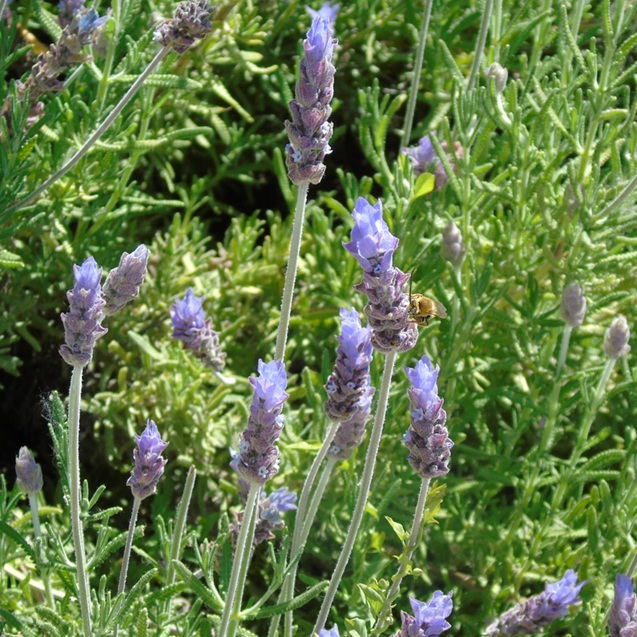
Lavender is a perennial plant that can reach about 70–80 cm in height. Its purple, spike-shaped inflorescences are made up of numerous tiny flowers. Its flowering period extends into low temperatures, thus providing food for pollinators during times when other species have stopped flowering.
3. Sage Common sage
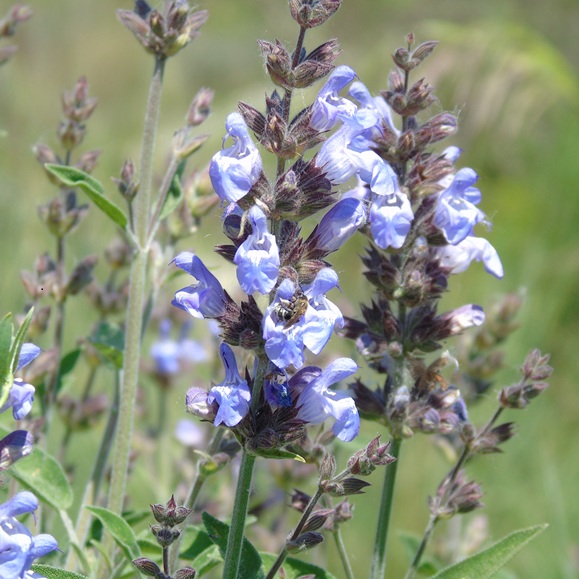
A perennial plant reaching approximately 60 cm in height, with flowers generally violet or blue in colour. Although it is native to the Mediterranean region, it has been widely cultivated and has naturalised in various regions of the world for its culinary and medicinal uses.
In our study, it was the species that received the highest number of visits from wild bees, along with lavender.
4. Matagallo Purple Jerusalem Sage
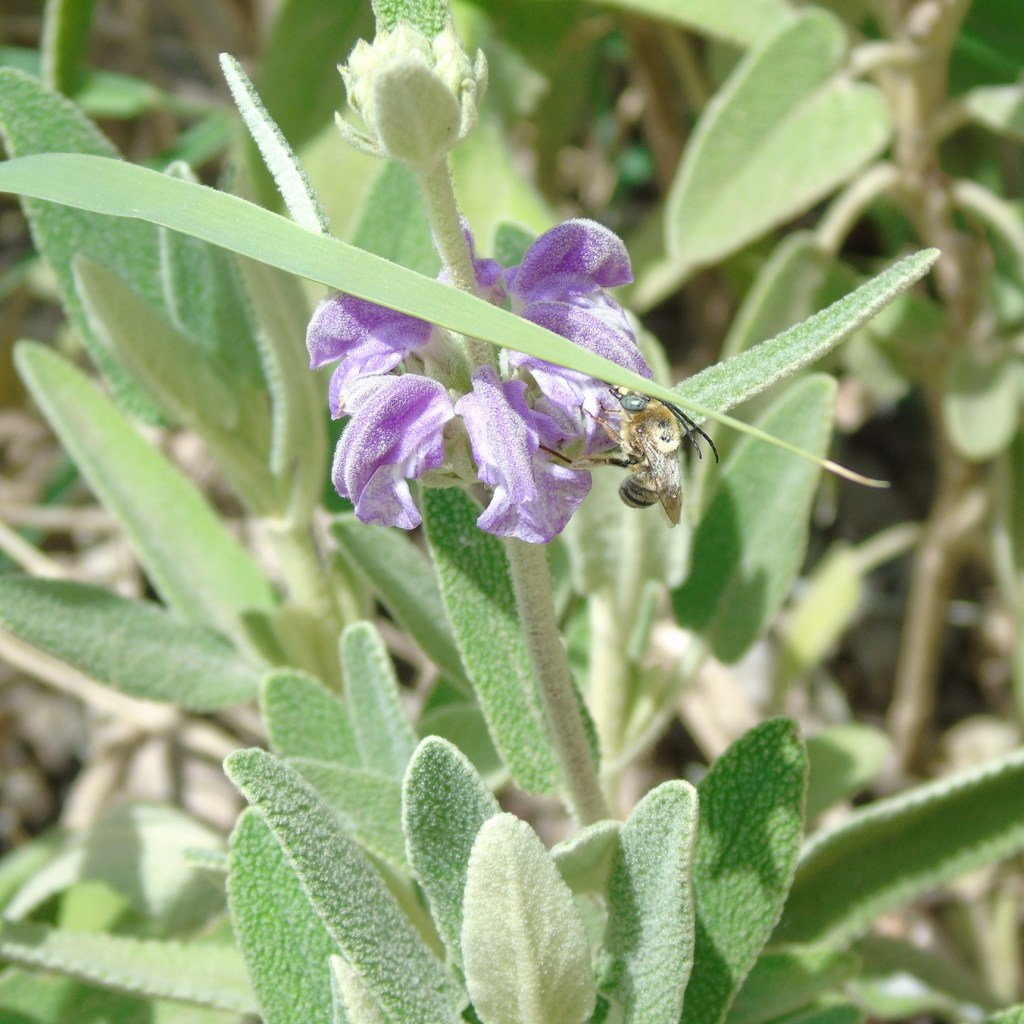
A shrub that can reach around one and a half metres in height. Its leaves are covered in fine hairs, giving them a velvety appearance. The inflorescences, in shades of pink to purple, are reminiscent of a rooster's comb, hence its common name. It is an Ibero-African species, particularly present in the south of the Iberian Peninsula.
5. Olivilla Teucrium fruticans
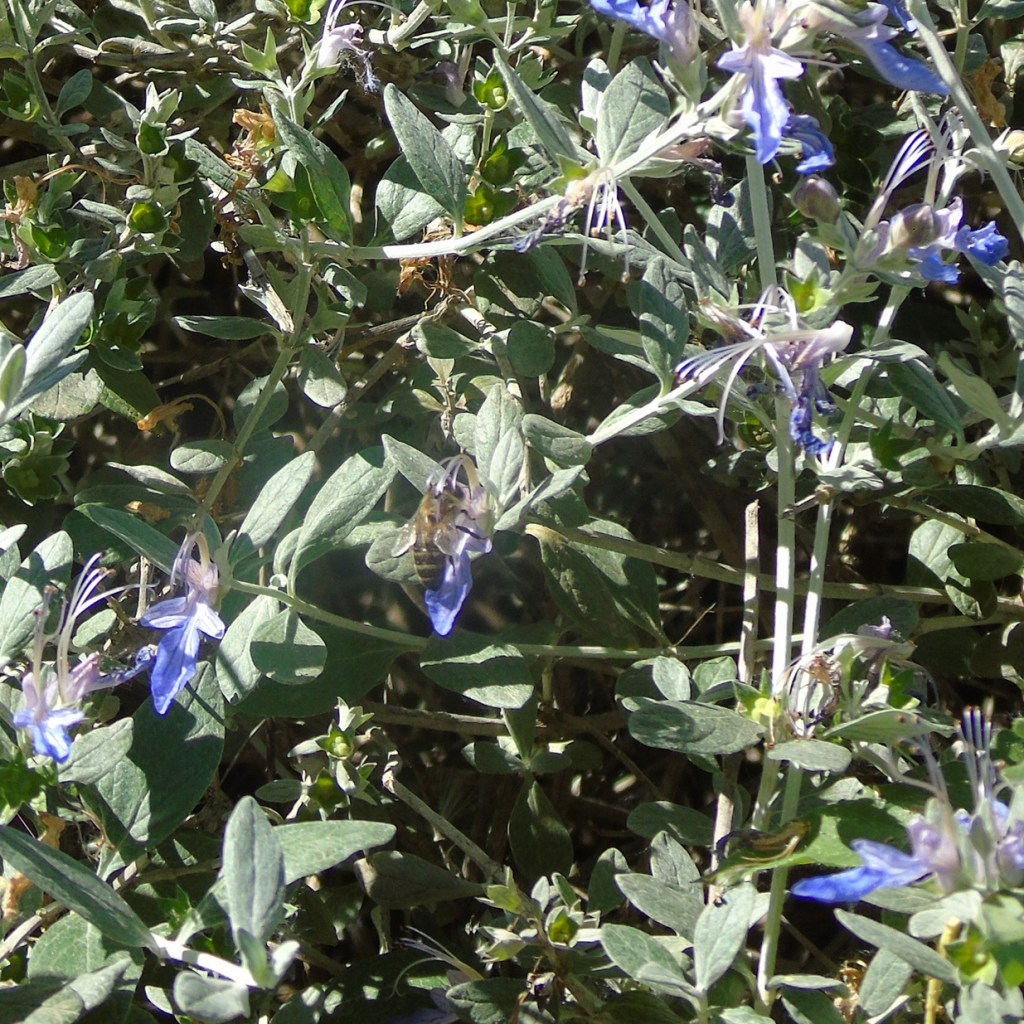
A perennial shrub with spreading branches, which can exceed one metre in height. Its greyish-green leaves contrast with the flowers, usually in shades of blue to violet. Like the matagallo, it is well adapted to dry climates. The genus name «Teucrium»refers to the mythological hero Teucrus, to whom tradition attributes the medicinal use of these plants.

 English
  Spanish