

The bees are a popular and important group of insects for humans. Hence, the group is relatively well documented with a good body of literature for study.
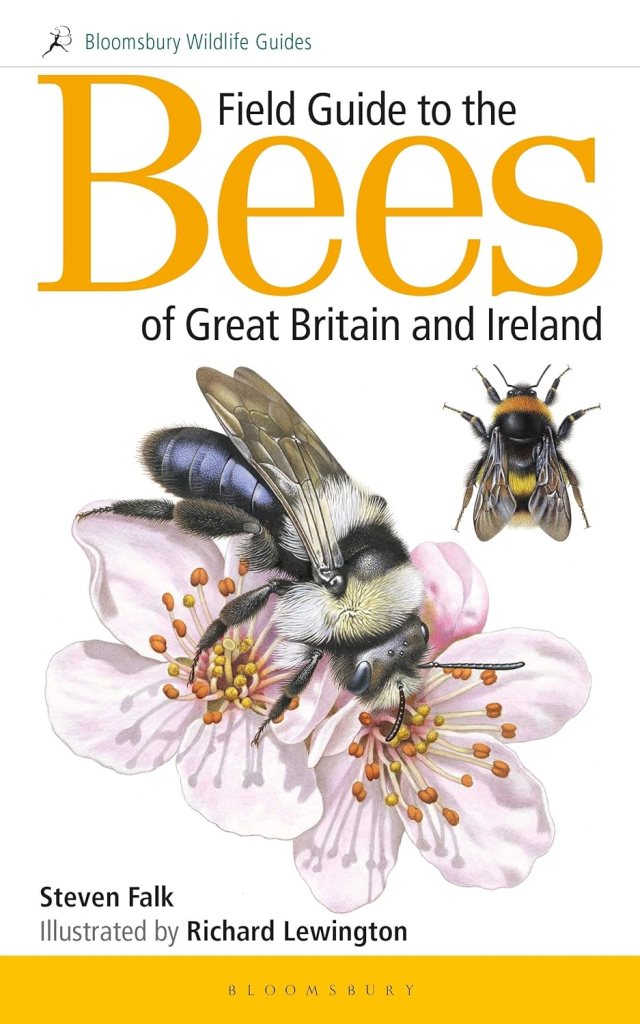
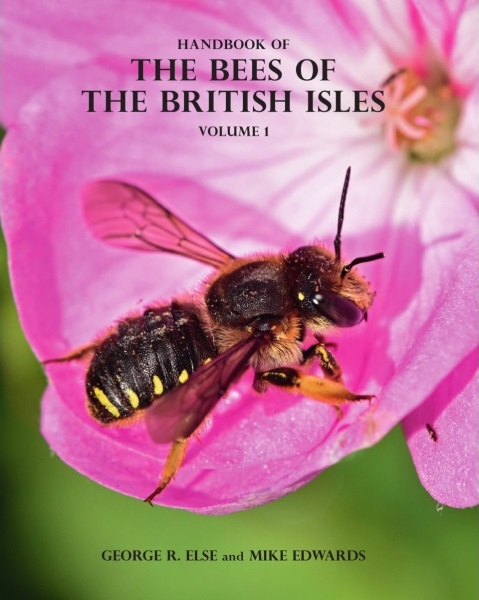
Countries such as Switzerland, Germany and, above all, the United Kingdom and Belgium, already have very good and growing bibliographic coverage. The United Kingdom in particular is a reference and an example of an excellent bibliographic offer, with the "Field Guide to the Bees of Great Britain and Ireland". by Falk and Lewington and the "Handbook of the Bees of the British Isles". by Else and Edwards. With the help of these brilliant field guides and their online support organised initiatives such as BWARSthe society for the registration of hymenopterological data.
The situation in the Iberian Peninsula is more complicatedThe following is an overview of the species present, given the relatively higher number of species present on the one hand, and the relatively poorer knowledge situation on the other hand. The following is an overview of the available resources for the study of bees in this geographical area.
Works directly covering the Iberian Peninsula
| Title | Groups covered | Geographical scope | Format |
|---|---|---|---|
| Hymenoptera, Apoidea I | Colletidae, Mellitidae, Apidae | Iberian Peninsula | Book |
| The Resin and Wool Carder Bees (Anthidiini) of Europe and Western Turkey | Anthidiini | Europe, Turkey | Book |
| The genus Andrena, Fabricius, 1775 in the Iberian Peninsula (Hymenoptera, Andrenidae) | Andrena, | Iberian Peninsula | Article |
| Identification key to the European species of the bee genus Nomada Scopoli, 1770 (Hymenoptera: Apidae), including 23 new species | Nomada | Europe. | Book |
| Review and identification of the cuckoo bees of central Europe(Hymenoptera: Halictidae: Sphecodes) | Sphecodes | Europe. | Article |
| Keys and new data of the Iberian species of the genus Stelis Panzer 1806 (Hymenoptera, Apoidea, Megachilidae, Anthidiini) | Stelis | Iberian Peninsula | Article |
| Identification keys for the Iberian species of the genus Coelioxys Latreille 1809 (Hymenoptera, Apoidea Megachilidae) | Coelioxys | Iberian Peninsula | Article |
| Taxonomic Revision of the Subgenus Micrandrena (Hymenoptera: Apoidea: Andrenidae: Andrena,) of the Iberian Peninsula. | Andrena (Micrandrena) | Iberian Peninsula | Doctoral thesis |
| Atlas Hymenoptera | Bees: | Europe. | Website |
| Pollinator Academy - Apoidea | Bees: | Europe. | Website |
| Bumblebees of Europe and neighbouring regions. Hymenoptera of Europe 3. | Bombus | Europe and neighbouring regions | Book |
As can be seen, there is no unifying work, nor is the treatment of the different groups the same. If for groups such as the Anthidiini or the genus Nomada while fully satisfactory material is already available, the situation for other groups such as the Halictidae is quite different.
For this reason, it is also worth mentioning some other identification works which, although they do not deal directly with the Iberian fauna, are useful and necessary for its study.
Other useful works of European scope
| Title | Groups covered | Geographical scope | Format |
|---|---|---|---|
| Fauna Helvetica, vols. 1 to 6 | Bees: | Switzerland | Books |
| Illustrierte Bestimmungstabellen der Wildbienen Deutschlands und Österreichs, vols. 1 to 3 | Bees: | Germany, Austria | Books |
| Clé illustrée des abeilles de Belgique et des régions limitrophes (Hymenoptera: Apoidea) II. Megachilidae | Megachilidae | Belgium | Book |
| Clé illustrée des abeilles de Belgique et des régions limitrophes (Hymenoptera: Apoidea) I. Halictidae | Halictidae | Belgium | Book |
Finally, although it is not an identification manual, "Bees of Europe by Michez, Rasmont, Terzo and Vereecken, is the only book that currently collects all bee species reported in Europe accompanied by the relevant bibliographical references. It therefore has its place as a reference work.

In summary, the identification of Iberian bees to species level is not a trivial issue, starting with the access to information. The references presented here are, for the time being, a mere introduction to the subject, but we hope you have found them useful.

 English
  Spanish