

Pollinators are the animals that transfer pollen between the male and female parts of flowers, allowing them to reproduce. Although there are mammals, birds and reptiles that pollinate plants, most pollinators are insects.
Many animals visit flowers, but not all of them act as pollinators. There are several factors that make an animal an effective pollinator: the abundance of the animal in its community, the tendency of the animal to come into contact with the male and female reproductive organs of the plant, its ability to carry pollen, and whether or not the animal moves between flowers of the same plant species, as well as the distance it travels to do so.
The most important groups of pollinating insects are briefly described below:

- Butterflies and moths:they constitute the richest group of flower-visiting species, with an estimated 140,000 species. The pollination capacity of moths has been relatively little studied due to their nocturnal habits. Butterflies are often considered minor pollinators compared to bees because they carry less pollen and visit flowers less frequently. However, some butterfly species can be as effective pollinators of flowers as bees.
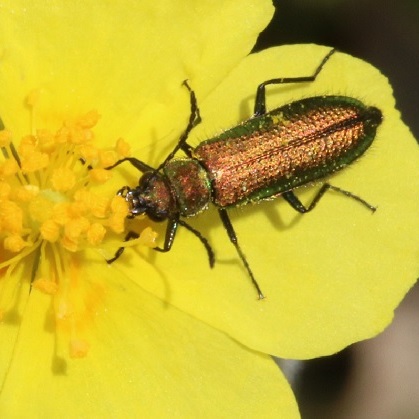
- Beetles:they are the next most abundant group of flower-visiting species, with an estimated 77,000 species. The role of beetles as pollinators has not been as studied as that of bees or butterflies. However, there are plants that have evolved to attract beetles and depend on them for pollination. Beetles that stand out as pollinators can be found within different groups such as leaf beetles (chrysomelids), longhorn beetles (cerambycids) or flower chafers (cetonids).
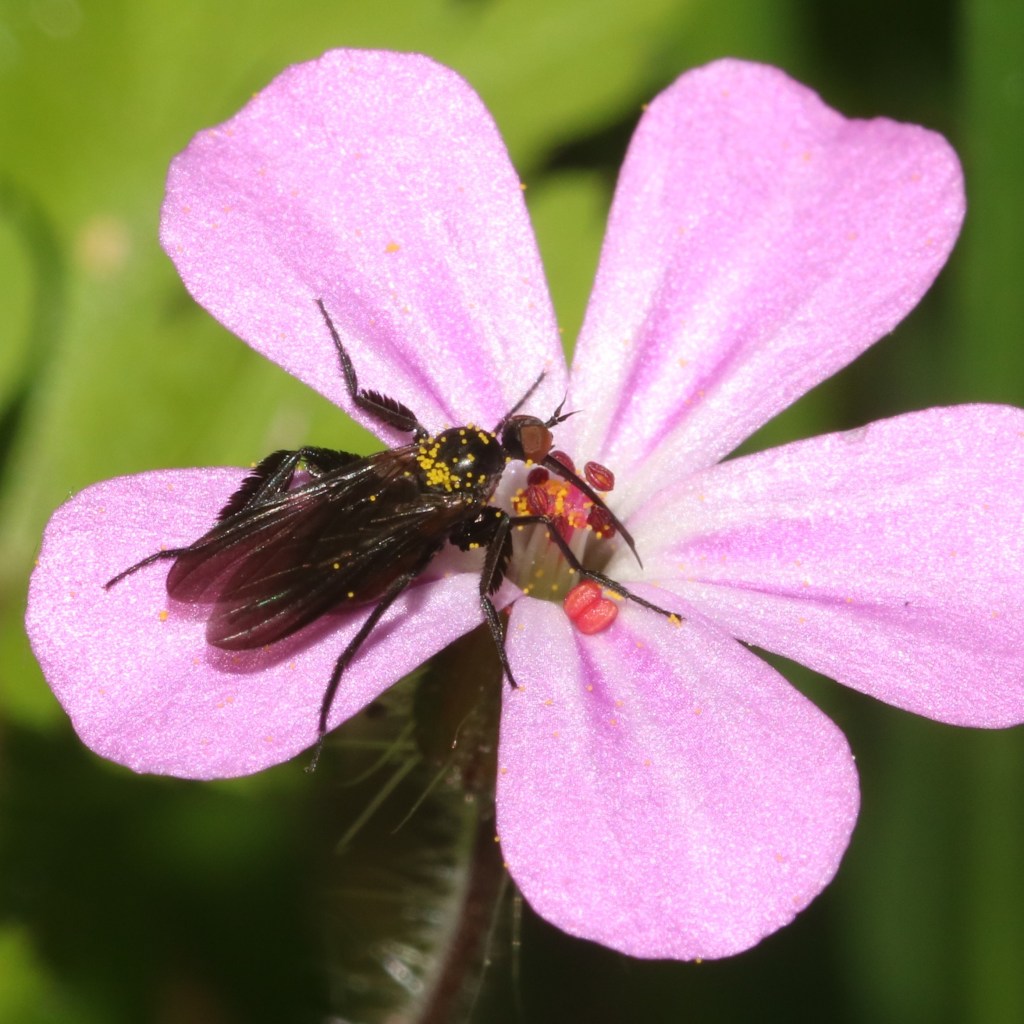
- Flies:they comprise around 55,000 pollinating species. The most prominent groups of pollinators are syrphids and bombylids, or bee flies. Hoverflies are common visitors to flowers, and have similar colouration and hairiness to bees and wasps. Bombylids are named for their similarity to bumblebees and have a long tongue that allows them to pollinate flowers with long corollas. Other groups of flies also visit flowers more or less regularly to feed on nectar, pollen, prey or mate. Flies can become especially important pollinators in cold climates.

- Bees:there are around 20,400 species of pollinating bees. However, despite their lower diversity compared to the previous groups, their size, hairiness and behaviour make them generally very effective pollinators. Although pollinators are often associated with honey bees, other social bees, solitary species, and parasitic or cuckoo bees are also important pollinators.
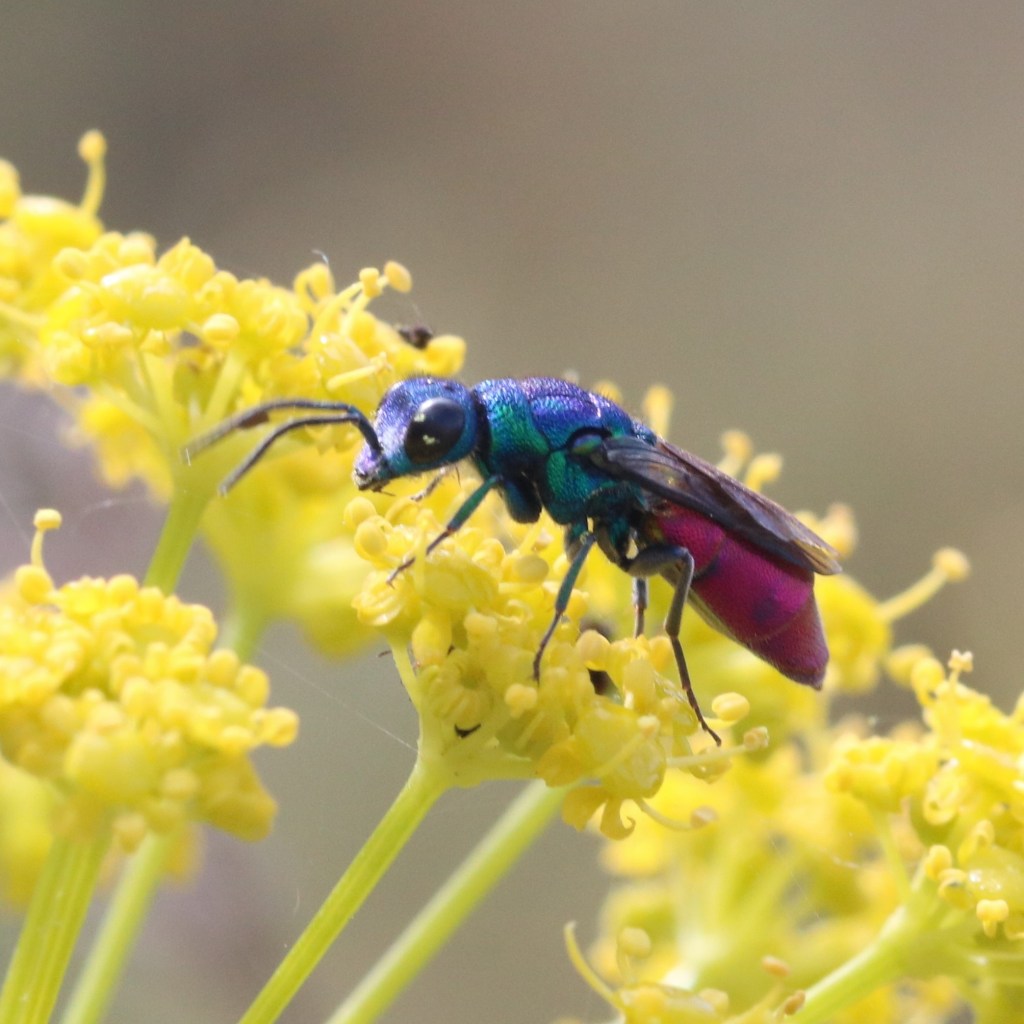
- Wasps:they differ from bees in that they are mostly carnivorous or parasitic. Although there are species whose diet is based on pollen and nectar, most of them only feed on nectar as a source of energy. Even so, they can act as pollinators and some flowers are adapted to pollination by wasps.

- Sawflies:although there is less information about them and there seem to be no plants adapted to their pollination, they are also frequent visitors to flowers and may be important pollinators.
Finally, there are insect species from other groups such as crickets, thrips, or cockroaches, which can also act as more or less specialised pollinators of plants.

 English
 Spanish