

Grasshoppers and crickets make up the order Orthoptera, a group comprising some 27,000 species known worldwide. Their name, which means "straight wings", refers to the way their forewings fold over their bodies.
General characteristics
Orthoptera are generally medium to large insects, although there are species that are only a few millimetres long. They have an elongated body, with enlarged hind legs for hopping and well-developed mandibles for chewing. Their forewings are stiffened and are called tegmina. The hind wings are folded under the tegmina, and in some species are very small or absent. One of the most striking features of the Orthoptera is the sound communication which many species use in their mating rituals.
Within the Orthoptera, there are two distinct suborders: the chaeliferans, which correspond to grasshoppers, and the ensiferans, which correspond to crickets. Grasshoppers are predominantly diurnal, and have shorter antennae, while crickets tend to be nocturnal, and have longer antennae, usually composed of more than 30 small segments.
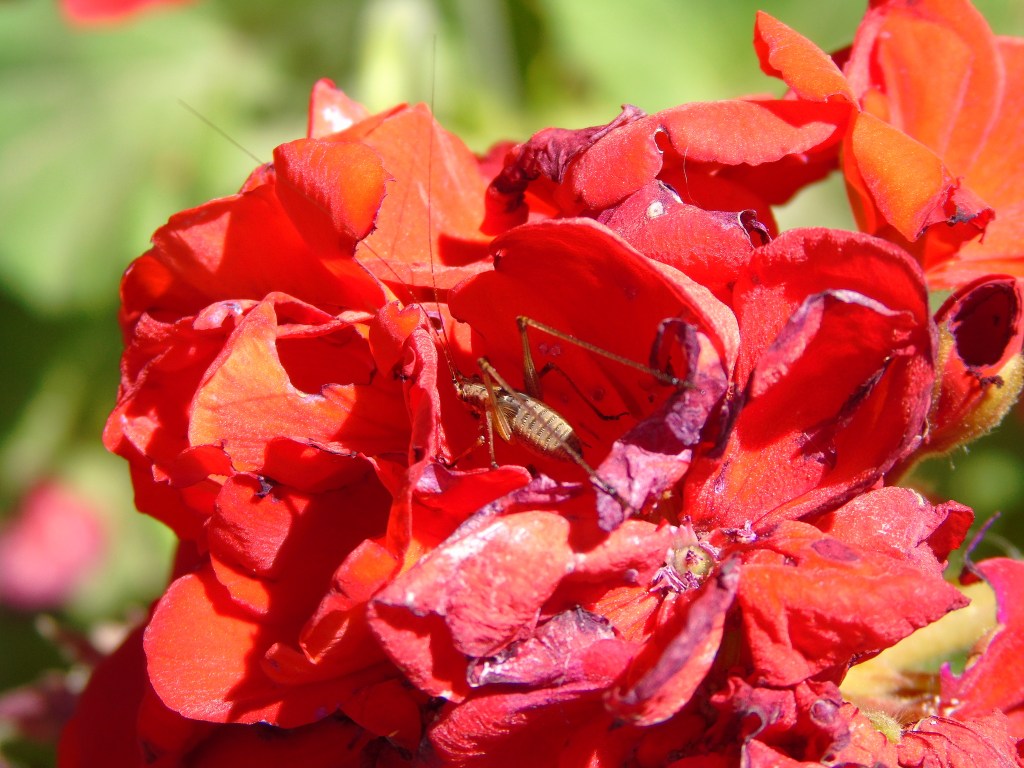
In terms of their life cycle, Orthoptera are hemimetabolous, i.e., their metamorphosis is incomplete. Nymphs emerge from the eggs, which are very similar in shape to adults, and develop gradually through several moults. However, some species that develop in the soil may have stages that look very much like larvae.
Where do they live?
Orthoptera are found almost everywhere in the world, except in the coldest areas, with the greatest diversity of species in the tropics. They are adapted to life in a wide variety of terrestrial environments: they are very typical of grasslands, but also inhabit heathlands, forests, caves or the margins of rivers and ponds.
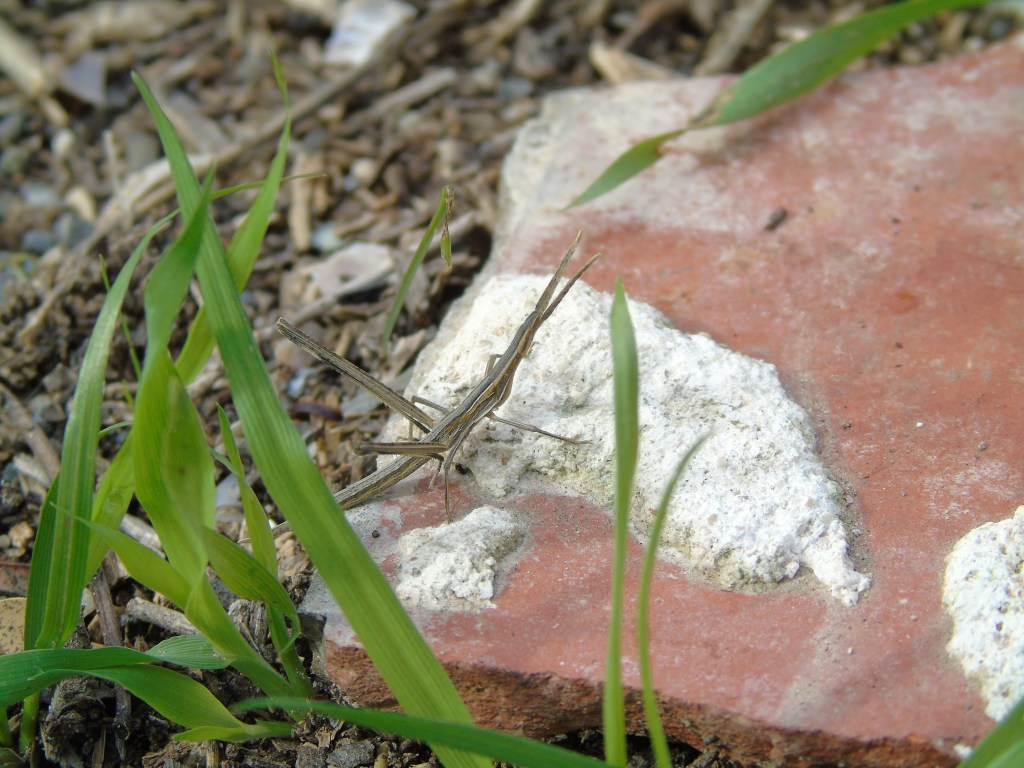
For example, grasshoppers of the family Acrididae
usually have an appearance that allows them to camouflage themselves in the vegetation and soil they inhabit, with some having twig or stem shapes, or earthy colours that make them difficult to see in soils with little vegetation cover. Orthoptera of the family Tridactylidae have legs adapted for burrowing in moist soil and even walking on water, and feed on organic matter in water bodies.
and even from raindrops accumulated on leaves or stems, in the case of arboreal species. Finally, mole crickets, of the family Gryllotalpidae, have legs well adapted to digging. They hide in the ground during the day and some species even build acoustic chambers to amplify their song.
What do they eat?
Most orthopterans are phytophagous, i.e. they feed on plants. Some have a very specialised diet, consuming only the seeds, pollen or nectar of certain plant species. In addition, they may also consume roots, fungi, algae, organic debris and prey on other insects. In general, grasshoppers are herbivores and crickets are omnivores.
Ecological importance
Orthoptera are a central part of the food chain. On the one hand, they act as consumers of vegetation and insects. On the other, they are a food source for a wide variety of predators and parasites, including beetles, wasps, spiders, small mammals, flies and mites.
In addition, some species have been observed to act as pollinators, although not many studies have explored this role.
Although some species have the potential to become agricultural pests, it is important to note that predatory species can also help control insect pests such as aphids and mealybugs. In fact, the presence of crickets and grasshoppers is not usually a cause for concern, quite the contrary, as they are considered indicators of good ecosystem health.

 English
  Spanish