

Beetles are the insects of the order Coleoptera, one of the groups with the largest number of species. With approximately 390,000 described species, they represent between 30 % and 40 % of all insects and almost a quarter of all known species of animals, plants and fungi.
Characteristics of beetles
Beetles vary in size from tiny species, such as Scydosella musawasensis, the smallest free-living insect known with 0.32 mmto very large, such as Titanus giganteus,which reaches 17.5 cm and inhabits the forests of the Amazon rainforest.
The body of the beetles is compact and protected by a strong exoskeleton. Its most characteristic feature is that the first pair of wings is hardened, forming the elytra, which act as armour to protect the internal organs and the second pair of wings, used for flight. In addition, the elytra help them conserve moisture and regulate body temperature.
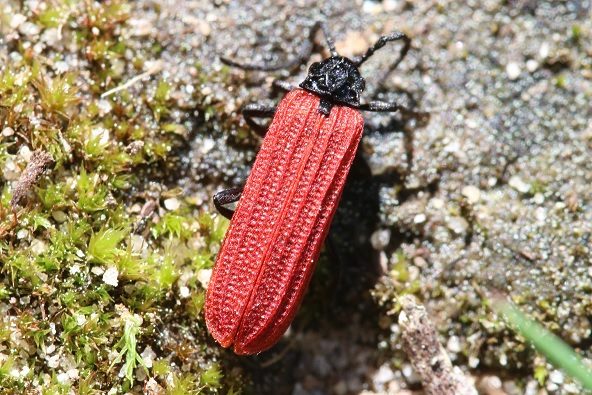
In terms of development, beetles are holometabolous,they have a complete metamorphosis. They are born as larvae, which usually have mandibles and a hardened head compared to other insects. Metamorphosis takes place underground or in protected cavities.
Where do they live?
Although most of the beetles are terrestrial, there are also many freshwater aquatic species and even some marine species. They have colonised almost every habitat on the planet except oceans, arid high mountain peaks, and polar ice caps. They prefer humid environments with a diversity of native vegetation, and their greatest diversity is found in tropical and subtropical environments.
Their adaptability has allowed them to thrive in a wide variety of habitats. In forests,many saproxylic species inhabit the wood of dying or dead trees; in streams and ponds, species such as the dytiscid beetles have legs adapted for swimming. In the desert,the tenebrionids have their elytra fused together and bury themselves during hot periods to avoid desiccation. Even in our houses it is possible to find species such as the flour beetles (Tribolium).
What do they eat?
One of the factors behind the evolutionary success of the beetles is their ability to feed on all types of plant tissuesincluding flowers, fruits, seeds, leaves, tree bark and algae.
In addition, fungivorous or mycophagousbeetles that feed on mushrooms, and carnivorespecies, are also common. Carnivores prey on other insects, slugs, spiders, millipedes, aphids and even small fish or amphibians in the case of some aquatic species.
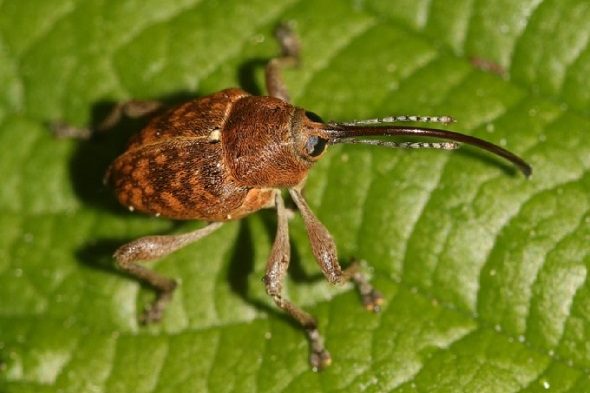
Less frequent are the parasite and parasitoid species,which feed on other species causing their death or not. Examples of this group include the small hive beetle (Aethina tumida)which consumes the pollen, honey and eggs of honey bees, and oil bees (Meloidae), whose larvae attack the nests of solitary bees or the eggs of grasshoppers buried in the ground.
Finally, some species feed on both plant and animal remains, such as the well-known dung beetles, which feed on the excrement of vertebrate animals.
Ecological importance
Beetles play key roles in ecosystems, which are also beneficial to humans. Some predatory species,like certain ladybirds, help to control agricultural pests , which has promoted their use as a natural alternative to pesticides.
Other beetles are involved in pollination.However, in general, they are not very efficient compared to other insects such as bees. In addition, dung beetles and carabids contribute to seed dispersal.
Its most important function is the recycling of nutrients. Thanks to their ability to digest different types of organic matter, they contribute to the decomposition of animal and plant remains and the reincorporation of their nutrients into the ecosystem. As a curiosity, in the 1960s, the Australian government imported dung beetles to bury livestock excrement, the accumulation of which was proving problematic. The beetles performed the task with great success.

 English
  Spanish